
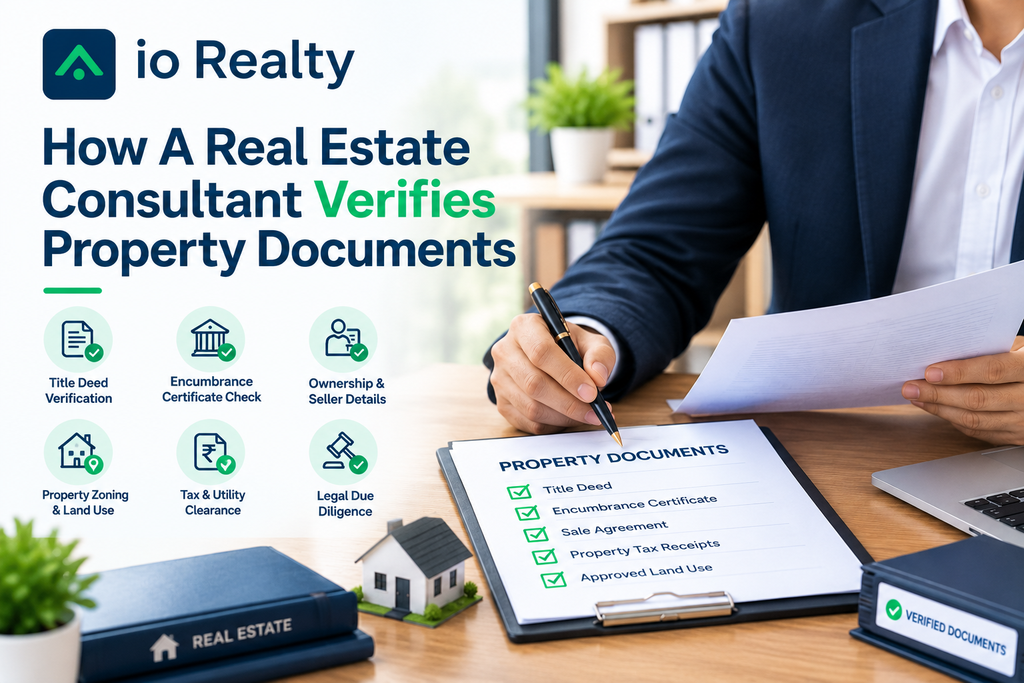
Buying property without properly checking the paperwork is one of the most common — and most expensive — mistakes buyers make. If you’ve ever wondered what a real estate consultant in Mohali actually looks at behind the scenes before recommending a property, document checks are a major part of it. This is where property document verification comes in, and understanding it can save you from legal disputes, financial loss, or properties stuck in approval limbo.
And to verify property documents before buying, you need to check the sale deed, title ownership history, encumbrance certificate, RERA registration, approved building plan, and possession/completion certificate — ideally with professional help, since errors in any one of these can create serious legal or financial risk later. Here’s a closer look at how proper property document verification actually works.
Checking the Sale Deed and Title Ownership
The first step in property document verification is confirming the sale deed is genuine and that the seller actually holds clear title to the property. This means tracing ownership history to ensure there are no gaps, disputes, or unresolved claims from previous owners. Skipping this step is one of the most common ways buyers unknowingly inherit someone else’s legal problem.
Reviewing the Encumbrance Certificate
An encumbrance certificate confirms whether a property is free from any existing loans, mortgages, or legal liabilities. This document is a core part of property document verification because it directly affects whether you can take a clean loan against the property, or whether you might inherit someone else’s unpaid debt along with it.
Confirming RERA Registration
For any project under construction, checking RERA (Real Estate Regulatory Authority) registration is essential. This confirms the project is legally approved, the builder has disclosed accurate project details, and timelines are being tracked under regulatory oversight. A project without valid RERA registration is a significant red flag in any property document verification process.
Verifying the Approved Building Plan
Buyers often assume that if a building exists, it must be approved — but that’s not always true. Checking the sanctioned building plan against what’s actually been constructed is a key part of property document verification, since unauthorized construction or deviations can create future legal and resale complications.
Checking Possession and Completion Certificates
For ready-to-move properties, confirming a valid completion certificate (and occupancy certificate, where applicable) ensures the property has legally cleared all construction and safety requirements. Without this, even a fully built property may technically remain “unapproved” in the eyes of local authorities.
Cross-Verifying Property Tax and Utility Records
A smaller but still important part of property document verification involves checking that property tax payments are up to date and that there are no outstanding utility or municipal dues tied to the property. Unpaid dues can sometimes transfer liability to the new owner if not cleared before the transaction.
Why This Process Shouldn’t Be Rushed
Each of these checks exists for a reason — skipping even one can expose a buyer to disputes, financial loss, or delays that take years to resolve. This is exactly why experienced guidance matters so much during property document verification: it’s not just about collecting paperwork, but knowing what each document should actually say, and recognizing when something doesn’t add up.
How io Realty Handles Property Document Verification
As a real estate consultant in Mohali, io Realty treats property document verification as a non-negotiable step before any project is recommended to a client. Before a property reaches a client’s shortlist, our team checks sale deed authenticity, title history, RERA status, approvals, and completion certificates — so clients aren’t left to interpret complex legal paperwork on their own.
This approach reflects a structured, SOP-driven process built on years of hands-on experience navigating property transactions across Mohali and the wider Tricity region. We don’t just hand over documents — we walk clients through what each one means and flag anything that needs closer attention before a decision is made.
Frequently Asked Questions
How do I verify property documents before buying?
Check the sale deed and title ownership history, obtain an encumbrance certificate, confirm RERA registration for under-construction projects, verify the approved building plan, and check possession/completion certificates along with property tax records.
What is an encumbrance certificate, and why does it matter?
An encumbrance certificate confirms whether a property has any existing loans, mortgages, or legal claims against it. It’s essential for property document verification because it affects both legal ownership clarity and your ability to secure financing.
Why is RERA registration important when buying property?
RERA registration confirms that an under-construction project is legally approved and that the builder is required to disclose accurate details about timelines, approvals, and project specifications, offering buyers a layer of regulatory protection.
Can a real estate consultant help with property document verification?
Yes. A real estate consultant in Mohali, like io Realty, typically verifies key documents — including the sale deed, RERA status, and approvals — before recommending a property, helping buyers avoid legal and financial risks.
Is property document verification different for ready-to-move versus under-construction properties?
Yes. Ready-to-move properties require checking possession and completion certificates, while under-construction properties require closer attention to RERA registration, approved building plans, and construction timelines.